
Most coaching leadership programmes generate insight. Far fewer generate sustained behaviour change. The gap between the two is where organisational investment quietly leaks away, and it is the gap senior leaders most often ask me to close.
The honest answer is that reflection becomes behaviour change when leaders are trained in deeper levels of reflection, and then supported with a context-fit daily practice, light measurement, and accountability structures that survive real workload pressure. Insight on its own fades under load. Embedded practice does not.
This article sets out how to design the embedding phase of a coaching leadership programme so that reflection becomes routine in meetings, in coaching conversations, and in the way leaders manage themselves day to day.
Why Reflection Stalls at Insight
Reflection often stops at the first level, a descriptive account of what happened. That is useful, yet it rarely changes behaviour. Leaders notice something, name it, perhaps share it in a workshop, and then return to a calendar that gives them no structural reason to act on what they noticed.
The deeper levels are where change actually forms. They include linking what you notice to your mental and emotional state, clarifying your motivation to change, and then deliberately contemplating the benefits of change against the costs of staying the same. When leaders practise sitting with those two visualised possibilities, commitment strengthens naturally. Motivation stops being a slogan and becomes a felt experience.
A programme that trains only the descriptive level will produce articulate leaders who behave exactly as they did before. A programme that trains the full progression produces leaders who change.
A Case in Point: The Sydney to Hobart Navigator
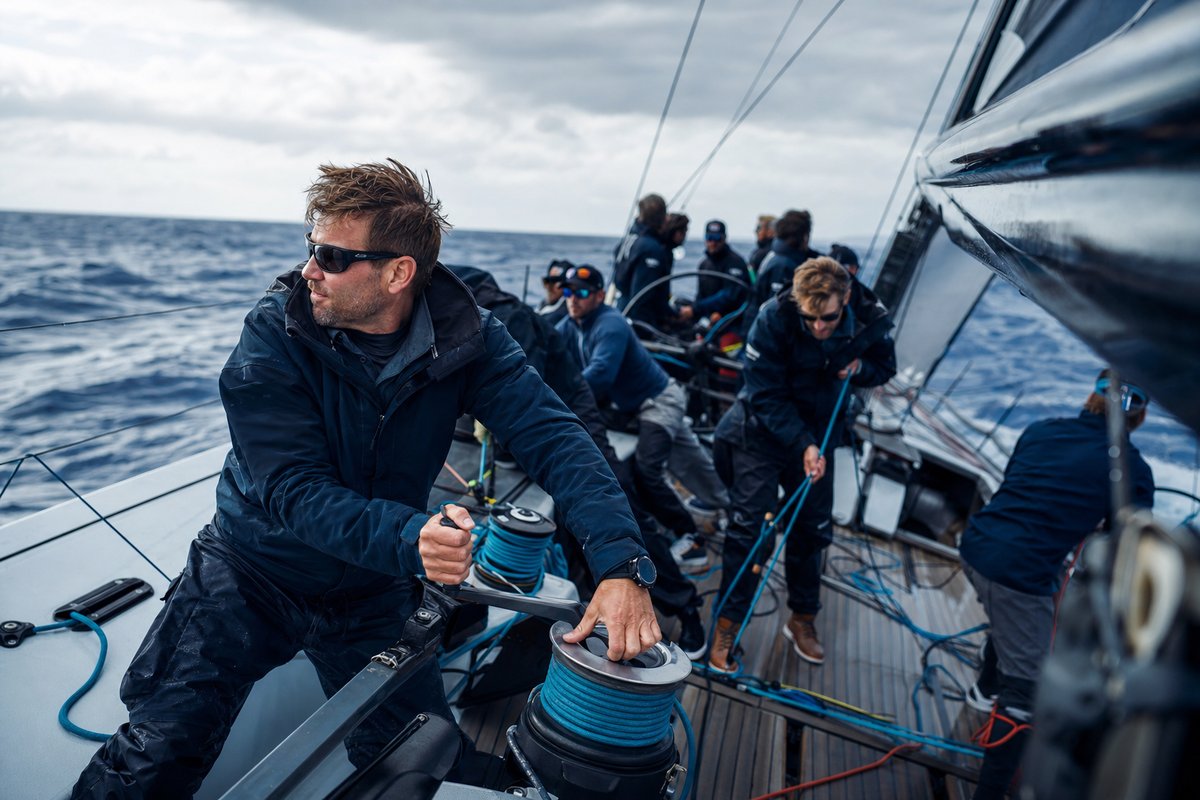
Some years ago I worked with an elite crew preparing for the Sydney to Hobart, including one of the most experienced navigators in the history of the race. Through reflective practice, he came to see that his leadership style, which was driven by genuine care for the crew and the asset, was undermining the focused attention of his crew members and reducing their performance.
His behavioural shift was concrete. He stopped telling people how to do things. He communicated what needed to be done, and he trusted that the crew knew how to do it. Alongside this, he used reflection to track his own stress and anxiety, which produced calmer leadership, better sleep, and sharper cognitive performance. The crew went on to win their category.
Two things made this stick. The first was a clear explanation of the science of attention, awareness, stress, and high-performance mindset, which gave him a strong reason to change. The second was a weekly shared reflection with the team that ran for three months, structured across three levels: descriptive (what happened), theory-informed (how do attention, acceptance, impermanence, and identity explain this), and action-oriented (so what, now what), which fed directly into goal setting.
The Three-Level Debrief Rhythm
The three-level structure travels well into organisational settings. In any team meeting, project review, or coaching conversation, leaders can be guided through:
- Level 1, descriptive reflection. A clear account of what happened, without interpretation.
- Level 2, theory-informed reflection. What does the relevant knowledge tell us about why this unfolded as it did, and about how attention, awareness, stress, and identity shaped the outcome.
- Level 3, action-oriented reflection. So what, now what. This is where reflection links into a coaching model and produces a concrete goal.
Most organisational debriefs live at level one. Designing meetings and coaching conversations to reach level three is one of the highest-leverage moves a programme can make.
Designing the Embedding Phase
There is no one prescription for a coaching leadership programme of this kind. It is cultural change, and cultural change is co-developed with the people inside the organisation. That said, the programmes that embed successfully share a recognisable shape.
Cohort-based leader training. A group of leaders learn together how to coach, how to change their own behaviour, and how to support behaviour change in others. Learning as a cohort builds shared language and shared expectations.
Action learning on real goals. Leaders work on their own behavioural goal during the programme, rather than on hypothetical case studies. The goal is the curriculum.
Peer buddy accountability. Each leader reports to a peer buddy on practice and progress. This is light, regular, and human, and it carries the embedding phase through the first month, which is roughly the time required for a new behaviour to settle.
Reflection built into existing routines. Reflection becomes part of regular meetings, formal coaching meetings, and informal coaching conversations. The culture rewards and expects it.
A daily reflective practice designed for the individual. This is the one mechanism I would protect above all others if forced to choose. The components of the practice are shared across the cohort, but the design is personal. Some leaders practise with a partner. Some practise in transit. Some choose a fixed time, others a flexible window. The practice is paired with a way to measure and journal, on paper, on a phone, or online, so that progress is visible to the leader and, if they choose, to others.
The Real Barrier, and How to Remove It
The barrier that blocks the embedding phase is almost always the same. Everyone is busy.
What unblocks it is the lived experience that these behaviours save time. The initial training programme should set the scene with the science and evidence, giving leaders a credible reason to try the practice and linking it to their own goals. From there, the persuasion mechanism shifts. Research and internal metrics carry weight, yet the strongest evidence is the leader's own experience of the time returning to their week, alongside benefits to sleep, cognition, and relationships at work and at home. Once that is felt, resistance falls away.
What to Build, Starting Now
For HR Directors and senior leaders considering this work, three specific calls to action will move you forward.
First, audit your current leadership development for level-three reflection. If your debriefs and coaching conversations stop at description, redesign them.
Second, commission a co-developed programme rather than a generic curriculum. The shape can be familiar; the fit must be local.
Third, protect the embedding phase. Cohort training, action learning on real goals, peer buddy accountability, and a context-fit daily reflective practice with light measurement are the structures that turn insight into behaviour, and behaviour into culture.
Reflection becomes change when it is designed into the day. That is the work.