
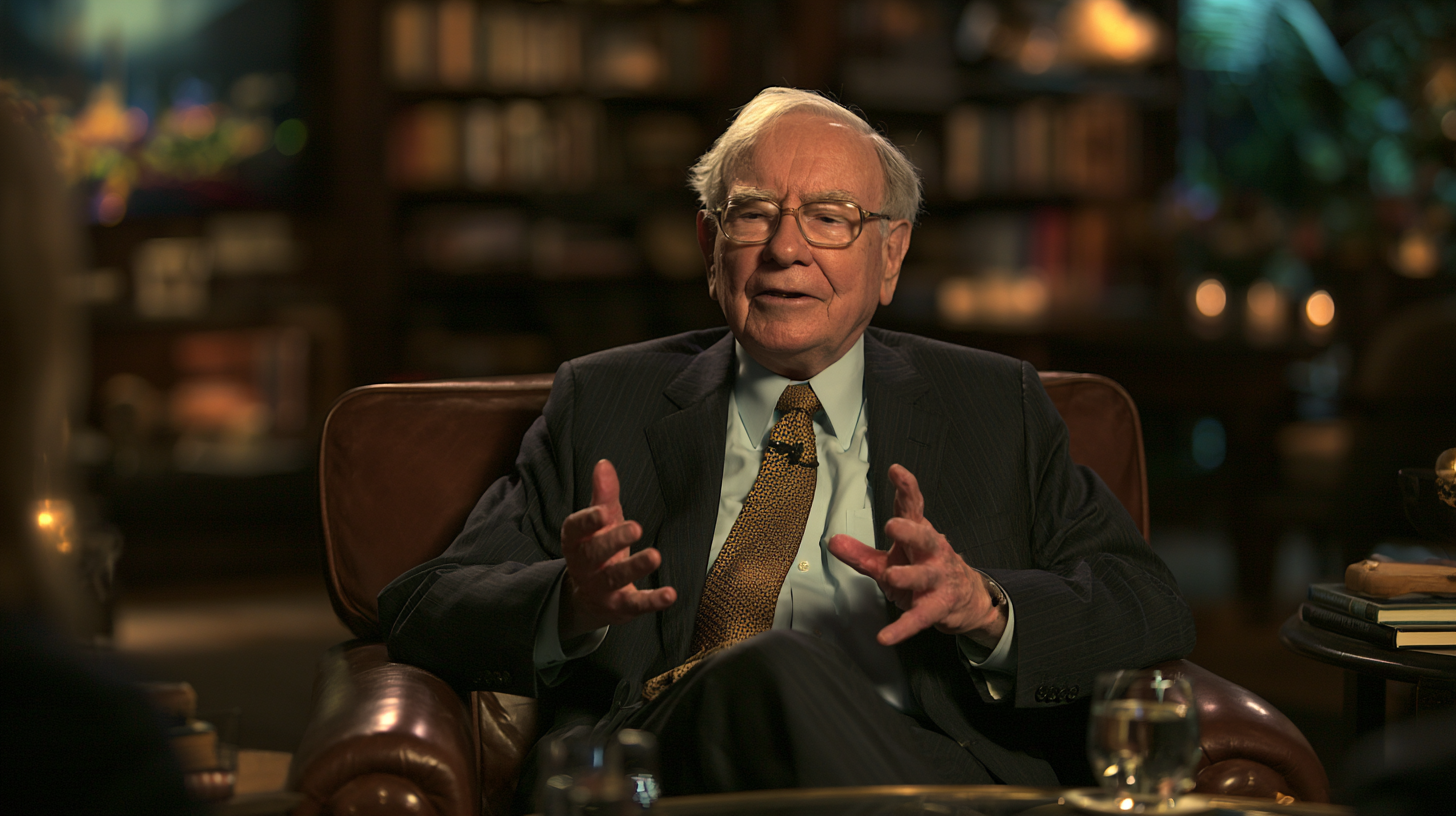
Peter Kunhardt’s documentary offers a study in sustained judgement, relational candour and responsibility under pressure. Viewed through the Mindful Chairship framework, Warren Buffett’s long career becomes a lesson in how leaders hold their course across changing governance seasons.
Film: Becoming Warren Buffett
Director: Peter Kunhardt
Released: 2017
Genre: Documentary
Governance lens: Mindful Chairship, collective wisdom and leadership in uncertainty
A Chair’s compass earns its value when the weather changes.
Becoming Warren Buffett traces the life, career and governing philosophy of a widely observed business figure. The film follows Buffett from his early fascination with numbers to his leadership of Berkshire Hathaway, while giving considerable space to the relationships, habits and values that shaped his judgement.
HBO describes the documentary as an account of Buffett’s life, career and credo. The film treats credo as a governing instrument: the principles used to choose direction under pressure.
Becoming Warren Buffett offers a sustained portrait of a leader reading conditions and holding course through them. Market crashes, corporate scandals, reputational threats and technological change each create a distinct kind of weather. Buffett’s practice provides a case study of the compass.
That compass has four points. They correspond with the four modes of Mindful Chairship: Executor, Connector, Strategist and Steward.
A life organised around attention
The film presents attention as a finite resource that Buffett allocates with unusual discipline. He reads for long periods, protects time for thought and returns to a small number of questions across decades.
These habits offer a useful governance lesson. Board attention is shaped through deliberate choices about what enters the room, how much time it receives and which questions remain open. A Chair can make this visible by reserving a standing 20-minute assumption check on the agenda for the decision requiring deliberate attention. Papers, agendas, presentations and reporting cycles all influence what directors can see. The Chair sets the conditions through which attention becomes judgement.
Buffett’s practice resembles the work of the Executor in the Mindful Chairship framework. The Executor creates material discipline. Information is distilled into a form that supports governance. Consequential questions receive sustained time. Complexity is organised so that directors can reason together.
Berkshire’s shareholder communication gives this discipline a visible form. Its annual meetings developed into extended question-and-answer sessions in which Buffett and Charlie Munger examined business, investment and leadership decisions in public. The Warren Buffett Archive holds recordings from 33 annual meetings, beginning in 1994, alongside thousands of pages of searchable transcripts. These meetings reveal the value Buffett placed on extended inquiry and plain communication.
The film shows a mind that protects the conditions required for clear thought. For Chairs, the practical question is immediate: what has been designed to help the board attend well?
The compass needs a second reader
The relationship between Buffett and Charlie Munger is central to the film and to Berkshire’s governance story.
Their partnership offers a clear expression of the Connector mode. The Connector tends the relational conditions through which candour can travel. This involves trust, sustained dialogue and a shared expectation that ideas will receive close examination.
Munger’s contribution often came through a short question, a direct disagreement or a refusal to embellish. The relationship gave Buffett access to another reading of the situation. Each man retained his own judgement, and their dialogue expanded the reasoning available to both.
The annual meetings made this relationship public. Buffett and Munger answered questions together for hours, allowing shareholders to observe their distinct styles of thinking. The Berkshire archive describes these meetings as five-hour exchanges covering business, investment, money and life.
For a board, this kind of relationship supports Group Attunement: directors track energy, hesitation and silence as data. It becomes visible when the Chair pauses a quick agreement and invites the final two speakers to name the risk that deserves further examination.
The Chair creates these conditions across the full board. Reticent directors need a route into the conversation. Dominant voices benefit from thoughtful regulation. Questions need enough space to develop. The quality of the board’s collective attention grows through these practical acts of chairing.
A compass held by one person gives a reading. A compass read collectively gives the board a basis for inquiry.
Holding the long course
Buffett’s long-term orientation forms a prominent part of his public identity. The film gives that orientation a human shape. Patience emerges as an active discipline, sustained through study, emotional regulation and confidence in a clearly understood method.
The dot-com boom placed this discipline under intense pressure. Buffett stayed with businesses whose economics he believed he could understand and underwrite. His position attracted public criticism as technology valuations climbed. The eventual collapse of the bubble demonstrated the governing value of holding a strategic question open long enough for events to test the underlying reasoning.
This is the Strategist mode of Mindful Chairship.
The Strategist holds the organisation’s long-run direction in view while immediate events compete for attention. This mode requires a Chair to keep asking whether the organisation is facing the right way, whether its assumptions remain sound and whether current decisions support the future it intends to build.
In permacrisis, every disruption carries a claim on board attention. Regulatory change, artificial intelligence, geopolitical risk, workforce pressure and climate transition may arrive within the same planning cycle. Strategic attention becomes an allocation decision. One workable rule is to name the two uncertainties that could reshape the business model and treat everything else as monitoring unless the evidence changes. The Chair identifies which questions require resolution and which deserve continued inquiry.
Buffett’s example illustrates the value of a stable decision philosophy. It provides a reference point when market signals become loud and organisational pressure intensifies.
The strategic compass is grounded in purpose, disciplined reasoning and an honest account of what the organisation understands. It gives the board a direction it can examine together.
Reputation is the keel
The film’s treatment of the 1991 Salomon Brothers crisis brings the Steward mode into sharp focus.
Salomon faced a threat to its existence following illegal manipulation of United States Treasury auctions. Buffett stepped in as interim Chair and chief executive. His response centred on disclosure, engagement with regulators, cultural responsibility and a clear ethical standard.
The episode shows stewardship as enacted responsibility. Reputation forms part of an organisation’s operating capacity. It shapes relationships with regulators, employees, customers, investors and the public. Protecting that capacity requires early disclosure, direct accountability and visible follow-through.
Buffett’s congressional testimony gave the standard memorable form:
“Lose money for the firm, and I will be understanding; lose a shred of reputation for the firm, and I will be ruthless.”
The statement has remained part of Berkshire’s public governance record. The annual meeting archive also documents Buffett’s continuing attention to Salomon and the leadership required to stabilise the organisation after the scandal.
The Steward holds substantive responsibility at the centre of the board’s work. Values become standards for decisions, information flow and accountability. Difficult news reaches the board early. Governance commitments shape conduct at the point of choice.
Here, the navigation metaphor reaches its central point. Strategy provides direction. Relationships keep the crew connected. Information discipline supports a clear reading of conditions. Reputation gives the organisation its keel, the stabilising structure that sustains integrity through difficult water.
Reading the leadership system
The film’s intimacy gives the documentary much of its strength. Buffett appears as a person shaped by family, routine, temperament, friendship and an enduring attachment to Omaha. The viewer can see how private habits develop into public leadership practices.
The documentary presents an executive-chair governance account. Buffett held the combined positions of Chair and chief executive at Berkshire Hathaway. Mindful Chairship in Australian governance settings often describes a non-executive Chair who governs through influence, process and boardroom conditions.
That distinction shapes how the four modes are enacted.
A non-executive Chair exercises the Executor mode through agenda design, paper discipline and information routes. The Connector mode develops through relationships across the board and between the Chair and chief executive. The Strategist mode sustains attention on long-run direction through questions and collective examination. The Steward mode brings values, accountability and stakeholder responsibility into board decisions.
Buffett’s experience provides a useful longitudinal case because the documentary records these modes across decades. The viewer can observe one leader moving between material discipline, relational candour, strategic patience and ethical responsibility as conditions change.
His partnerships, Berkshire’s decentralised structure and the organisation’s communication practices are equally significant. Governance takes place through character, systems, relationships and institutional conditions. Together, they form the leadership system through which judgement becomes action.
Reading the weather
Becoming Warren Buffett becomes especially useful when viewed as a film about navigation.
The documentary shows how a governing philosophy develops through repeated decisions, how relationships reinforce that philosophy and how crisis exposes its ethical foundations. The result is a portrait of leadership maintained across changing seasons.
For Chairs, the four points of the compass offer a practical viewing guide:
- Executor: How does Buffett organise information and protect attention?
- Connector: Which relationships strengthen his judgement and make candour possible?
- Strategist: What allows him to hold a long-term position through public pressure?
- Steward: How does he respond when the organisation’s reputation and legitimacy are at risk?
These questions move the film from biography into governance practice.
Permacrisis gives boards continually changing weather. The Chair reads the season, identifies the mode the board needs and tends the conditions through which collective wisdom can form. The compass comes from disciplined attention, relational candour, long-run direction and substantive responsibility.
Becoming Warren Buffett gives us a documented view of those four points sustained across a working life. A reliable Chair’s compass is built decision by decision, in ordinary meetings, through ordinary standards.